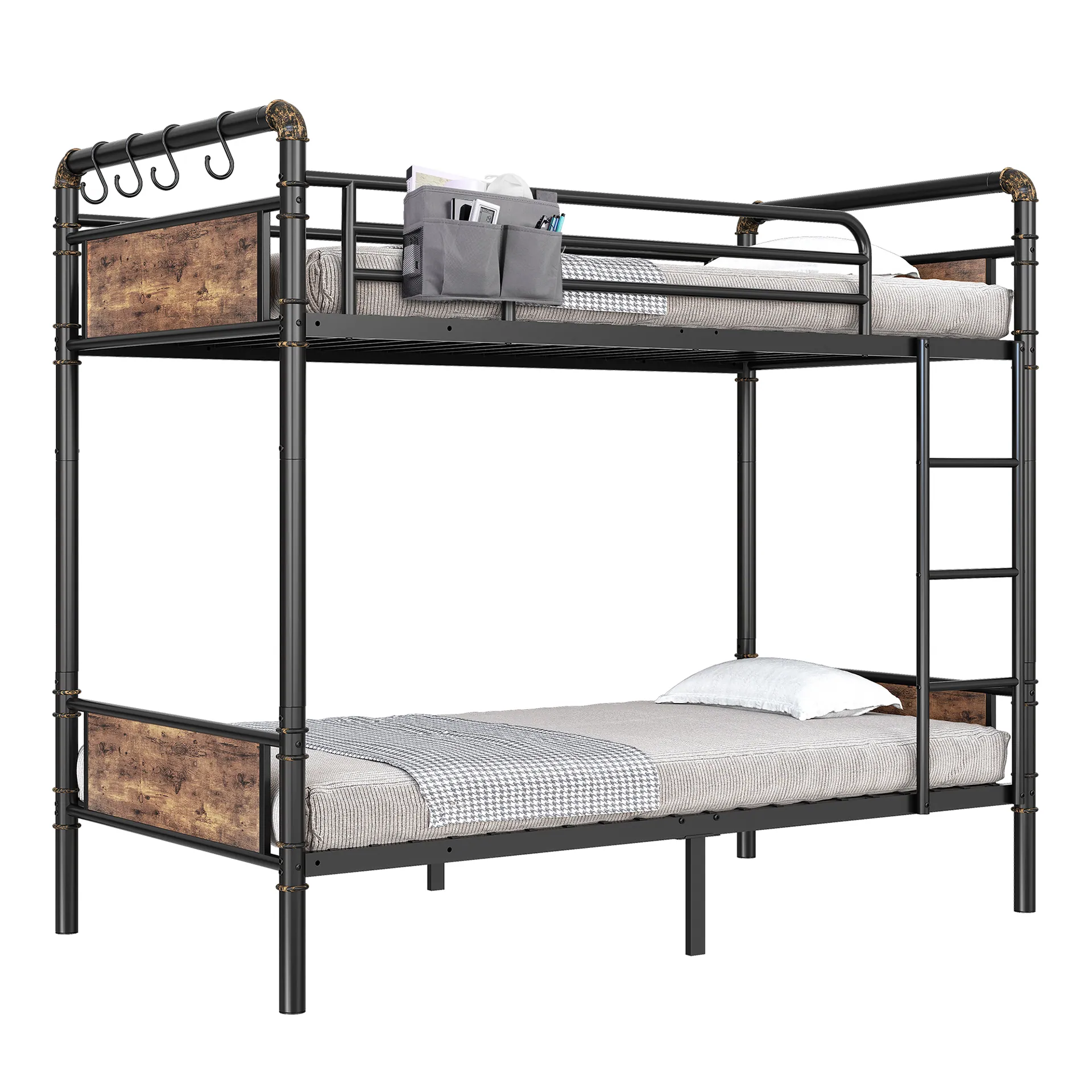
Beds with storage: what actually fits underneath
What under-bed drawers really hold, how much clearance a bed needs, and when a plain frame plus boxes wins.
What under-bed storage really holds
When we design a bed frame with space underneath it, we are not just making room look cleaner. We are giving you somewhere to put things. That sounds obvious, but most people buy an under-bed bin without measuring first, and then it does not fit. So let us talk about what actually goes down there.
The clearance under our frames varies by model. Some sit low to the floor, maybe six or seven inches of vertical room. Others lift the mattress higher, giving you twelve inches or more. You will find the exact height on each product page. Measure it twice before you order any storage containers.
A standard plastic under-bed bin runs about six inches tall. If your bed clears six and a half inches, one layer works. Two layers will not. Fabric bags compress a little, so they squeeze into tighter spots, but they hold less per cubic inch and they sag when you load them with books or dishes. Hard-sided rolling carts need the most room. We have seen plenty of customers measure the width correctly and forget about height entirely.
Mattress width changes the equation too. A Twin frame gives you roughly thirty-nine inches of side-to-side room. A Queen stretches that to sixty inches. A King is wider still. More width means more bins fit side by side, or one long shallow box spans the whole gap without leaving dead space at the edges. If you share a bedroom and both of you need storage access, a King lets you split the under-bed territory down the middle. A Twin forces you to reach across the whole bed to grab anything from the far side.
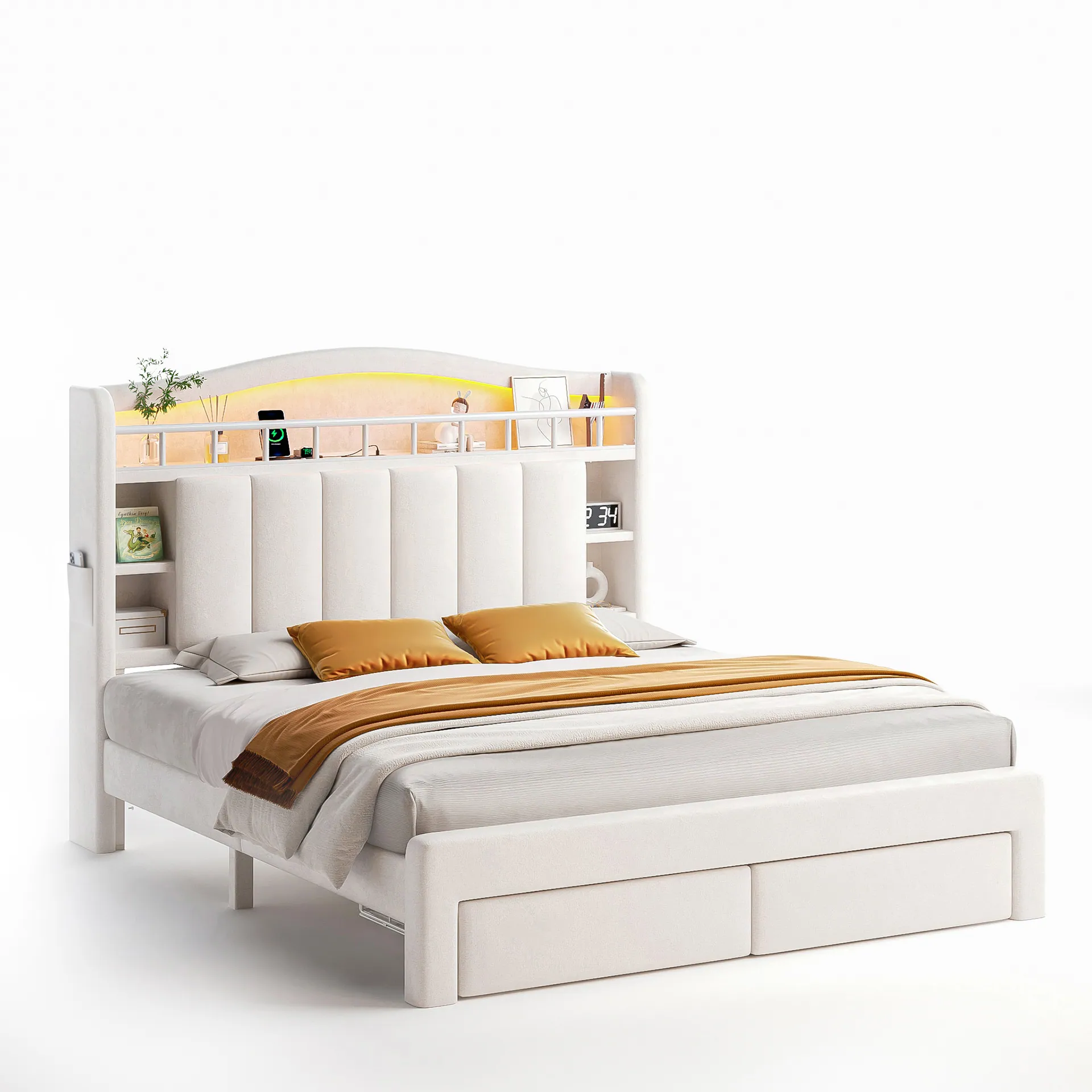
Our drawer-equipped models work differently. Those 165 frames with built-in drawers give you defined compartments rather than open voids. Each drawer holds what a small dresser drawer holds: folded clothes, extra bedding, off-season items. You lose some total volume compared to stacking bins in an empty under-bed space, but you gain organization and you do not have to crouch down and drag things out by hand.

Drawer beds versus lift-up bases
Drawer beds and lift-up bases solve the same problem in different ways, so the right pick usually comes down to how often you plan to reach underneath.
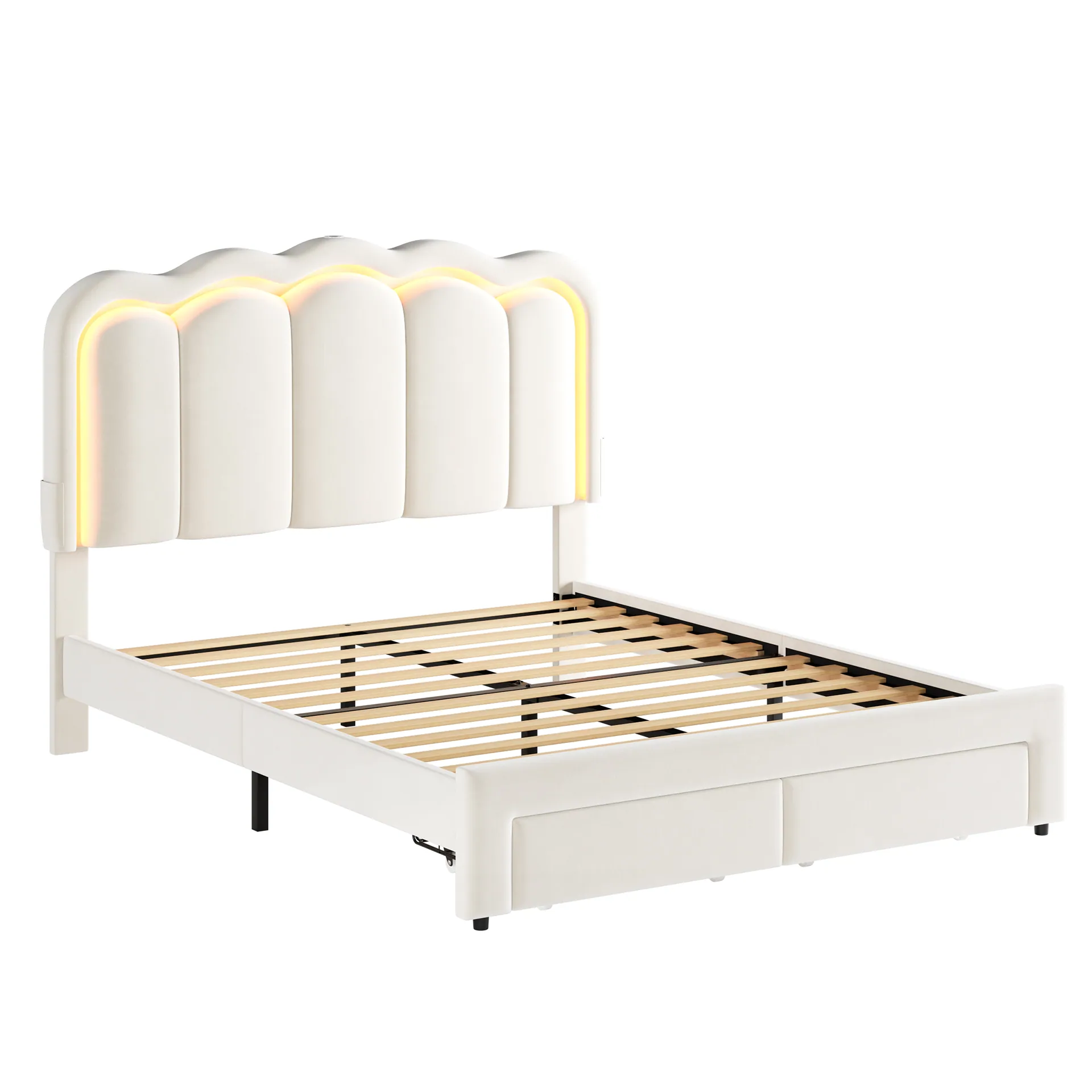
We build drawer beds with compartments that pull out from one or both sides of the frame. Across our range, 165 of our models include storage drawers. You will find between two and six drawers depending on the bed size and design, each mounted on glides that we test for smooth operation over repeated use. The main advantage is access without moving anything off the top.
Your everyday items, spare linens, or clothes you rotate by season stay separated in sections you can reach individually. One thing to watch: if you sleep near the edge where a drawer opens, that side needs clearance. Check the distance between your nightstand and the frame before you order a model with side drawers.
Lift-up bases take another approach. The whole slat platform rises on a mechanism, giving you one single cavity underneath instead of divided boxes. This design holds more total volume because nothing goes to drawer walls, hardware, or internal framing. It suits bulk storage well, like extra blankets or things you grab less often. The trade-off is that you lift the mattress every time.
We design our lifts to stay open on their own while you reach inside, but the motion still takes more effort than sliding a drawer out. You also lose the option to set a book or glass on a side rail the way you can with a drawer bed.
Most people decide based on how often they need the space. Daily access points toward drawers. Storage you touch a few times a month points toward a lift-up. Either way, confirm the assembled height fits your room and that you can walk around the bed once it is in place.
Clearance and the floor around the bed
The number that matters most isn't what fits under your bed. It's whether you can reach it once it's there. We list dimensions on every frame we make because we have seen people measure their mattress, buy a storage bed, and then realize they cannot open the bottom drawer without climbing onto it first.
A typical under-bed storage bin needs roughly six inches of vertical clearance to slide in and out. On our frames with built-in drawers, the clearance is fixed by the design and listed on the spec sheet. For rolling bins or shoe boxes under a standard frame, you need two numbers: the height of the frame rail off the floor, and the height of what you plan to store. The smaller of those two is your real working clearance.
Floor space around the bed causes more trouble than the clearance underneath. Our drawer-equipped beds pull out twelve to eighteen inches, depending on the model. You need that much room between the bed's side and the nearest wall or other obstacle. If you are placing a bed into a tight alcove, measure twice. Delivery day is a poor time to discover that the left drawer stops three inches short of fully opening.
Walking room and drawer room are not the same thing. You can walk past the foot of the bed in eighteen inches, or squeeze through in twelve if you turn sideways. But pulling a drawer requires its own dedicated space. Think about which direction each compartment opens, then check that nothing sits in its path.
Baseboards shift the math. When a bed sits against a wall, the baseboard can push the frame forward by half an inch or more. That changes where the drawers land relative to everything nearby. Floor vents matter as well. Covering a heating vent with a storage drawer drives up your heating bill and warms whatever you keep inside. Look at the floor before you commit.
Slats, box springs and what holds the mattress
Most of our bed frames use slats instead of a box spring. This matters more than it sounds if you are planning to use the space beneath your bed. A box spring adds five to nine inches of height right where you lose it, and that is before you put the mattress on top. With slats, the mattress sits lower, which leaves more vertical room for storage bins, luggage, or whatever else you need to tuck under there.
We build our slats from engineered wood on most models, and we space them so they support your mattress without sagging. You do not need to buy a box spring separately, and that saves money as well as inches. Check the product page: if it lists a weight capacity, we have tested the slat system to hold that number. About a hundred of our frames specify this, and the ones that do are built for the stated load.
Metal frames work a little differently. The metal beds we make usually accept either slats or a box spring, depending on how you set them up. If you already own a box spring and want to keep using it, look at our metal options or confirm whether an engineered wood frame has enough clearance above the floor. Some people prefer the feel of a box spring, and that is a valid choice. Just measure twice before you buy.
Solid wood slats show up on a small number of our frames. They are sturdy, but they cost more to source, so most of our line uses engineered wood instead. It handles weight just as well for daily use, and it keeps the price where we want it.
One detail that trips people up: the gap between slats can affect your mattress warranty with the mattress maker, not with us. Most mattresses need slats no more than three inches apart. Ours sit within that range, but if you bring your own slats from somewhere else, measure the spacing before you install them.

How much weight a frame is stated to take
When you are looking at a bed frame with drawers or shelves built into it, one number matters more than most others. That number is the stated weight capacity. We list this figure for 101 of our frames across the Bed Frames and Bunk & Loft Beds departments, and you should know what it actually means before you buy.
The capacity rating tells you how much total weight the frame can hold while staying stable. It covers the mattress, any foundation or box spring you put on top, and the people who sleep there. If you pick a Queen-size frame, which we offer in 36 models, and your mattress weighs eighty pounds, that leaves the rest of the capacity for you, a partner, maybe a pet who likes to jump up at three in the morning.
Material makes a real difference here. Our metal frames, and we build 78 of them, tend to carry higher ratings than our upholstered ones. Engineered wood sits somewhere in the middle. A solid wood frame might feel sturdier when you knock on it, but the joinery and slat system determine what it can actually hold. We test these numbers before we print them.
Here is something we want you to notice. The capacity applies to the frame itself, not necessarily to each drawer or shelf attached to it. Those compartments have their own limits. A wide drawer filled with heavy books pulls differently than one holding folded blankets. If you plan to store dense items under your bed, check that the drawer slides and base can take the concentrated load, not just that the overall frame number looks high enough.
We do not invent these figures. They come from the engineering work we do when we design each model. When you see a capacity listed on one of our pages, it reflects what we determined the frame can support without excessive flexing or stress on the joints. That said, if you expect two adults plus a thick memory foam mattress on a Twin frame, you may want to look at a Full or Queen instead and give yourself some margin. The rating tells you what the frame can survive. Comfort lives below that line.
STURDY, CPSC published a final rule in the Federal Register (88 FR 28403) that incorporates by reference ASTM F2057U.S. Consumer Product Safety Commission, Clothing Storage Units Business Guidance, read 21 August 2026
Headboards with shelves and outlets
A headboard does more than hold pillows against the wall. When we design one with built-in shelving or integrated power, it becomes the place where you actually live in your bedroom: charging a phone overnight, keeping glasses within reach, setting down a book before you fall asleep.
Of our bed frames that include a headboard, most come with some form of surface storage. We build these shelves into the structure itself rather than attaching them afterward, which means they sit flush and do not wobble when you lean on them. On upholstered models, the shelving wraps around or sits between padded panels so nothing looks bolted on as an afterthought. Engineered wood construction lets us keep the profile narrow while still supporting the weight of a lamp, a stack of books, or whatever you need at hand.
Power outlets and USB ports show up across our lineup more often than you might expect. We route the wiring inside the frame so you never see loose cords trailing behind the mattress. Most of these models include at least one standard outlet plus one or two USB ports, placed at heights that work whether you sit up in bed or reach over from a pillow. If you charge multiple devices, check the product page for the exact port count because it varies by width and by model year.
LED lighting pairs naturally with shelving headboards. The strip usually tucks under the top shelf or runs along the inner edge, giving you enough light to read without waking anyone else. You control brightness through a switch on the cord or, on newer designs, a small button built into the frame itself.
Measure the wall behind your planned placement before you commit. A headboard with deep shelves adds four to six inches of depth beyond what a flat panel requires, and you want that space clear of windows, door frames, or radiators. If you are choosing between two similar models and one has outlets while the other does not, think about where your current nightstand sits and what plugs into it right now. That tells you more than any spec sheet can.
Measuring the room before you order
Grab a tape measure before you add anything to your cart. Ten minutes now saves you the trouble of a return later. We have seen photos from people who measured once and guessed the rest, and the bed that looked right on screen ended up blocking a window or wedged against a closet door.
Start with the floor space. Measure the wall where the headboard will sit, then measure out from that wall to the first thing you will walk into. Write both numbers down. You will want to check them again when the delivery arrives.
Now check the height. Our storage frames add twelve to eighteen inches to the overall footprint, and that affects how much overhead room you need. If you have a ceiling fan or a sloped ceiling in that corner, measure from the floor up to the lowest point. Compare that number to our listed bed height plus your mattress thickness. Most mattresses run between eight and fourteen inches thick, so account for that before you commit.
Think about the path into the room. We publish the full dimensions of every frame, including the widest part of the headboard and the deepest point of the drawers. Check your doorway width and any hallway turns. A Queen frame with side storage runs six inches wider than the mattress, and you notice that difference when you carry it around a corner.
Leave yourself room to work. One inch of clearance on each side makes it hard to change sheets without shoving the bed. Two inches minimum lets you tuck in a fitted sheet and reach behind for dusting. If a dresser or nightstand will sit next to the bed, measure it and add that width to your total.
Look for baseboards that stick out farther than you expect, and note any vents or outlets low on the wall where a drawer could cover them. Our drawer units usually extend four to six inches past the mattress edge, so mark that area on the floor and confirm nothing important lives there.
Assembly, and what to retighten later
We design every frame so you can put it together without professional help. Most of our beds use cam locks and bolts that fit into pre-drilled holes on the engineered wood or metal rails. You will need a Phillips head screwdriver for almost every model. Some of the larger loft beds also call for a wrench, which we include in the hardware pack. The whole process usually takes between forty minutes and an hour if you are working alone, less if someone holds the other end while you tighten.
Here is the part that matters for anyone planning to use the space under the bed. We test our fasteners by taking each prototype apart and putting it back together multiple times before we approve it for production. A joint that feels solid on the showroom floor can still settle once a mattress sits on it for a month and someone climbs in and out every night. This is normal. It happens with steel frames as much as it does with wood ones.
Plan to check the main rail connections about six weeks after you first assemble the bed. Grab your screwdriver and give each bolt a quarter turn. You will likely find that two or three of them have loosened slightly. That is not a defect. The wood fibers compress, the metal expands and contracts with temperature changes, and the frame settles into its final shape under weight. One round of retightening is usually enough. After that, most people do it again maybe once a year, or whenever they notice the faint creak that means something has worked loose.
If your model has drawers, pay extra attention to the slides where they mount to the frame. Those take more movement than the rest of the structure does. The same goes for any headboard with built-in USB ports or lighting. The wires add a little weight, and the connections there see more stress when you lean against the panel while reading or sitting up in bed.
When a plain frame plus boxes wins
Sometimes the honest answer is that you do not need a bed with drawers built in. We make 79 bed frames across four sizes, and many include integrated storage, but that is not always the right call. There are situations where a plain frame plus whatever boxes fit underneath serves you better.
Look at the space under your bed first. If your room lets you slide containers in from the side, or pull them out from the foot without bumping a low rail, you have options that cost less than a drawer unit. Our entry-level frames start around $135, and rolling bins run thirty to sixty dollars at most stores. Two of those give you roughly the same volume as one of our under-bed storage pieces at half the price. The math is straightforward.
Think about what goes into storage. Seasonal clothes, extra bedding, and items you grab once or twice a year do not need the quick access that built-in drawers offer. Drawers work for daily use. Boxes work fine for long-term holding. If most of your stored things fall into that category, you are paying for convenience you will rarely touch.
Weight and moving matter here. Integrated storage adds heft, and it slows teardown because every drawer must come out before the frame comes apart. A plain engineered wood or metal frame from our range breaks down in minutes, fits in a car, and goes back together without sorting which part belongs where. We have moved enough to know this matters more than shoppers usually account for.
Depth counts too. Some of our loft and bunk designs sit high enough off the floor for tall plastic totes that would never slide into a shallow drawer assembly. You gain vertical room that no built-in system provides, simply because the design did not have to work around drawer hardware and panel thickness.
Living with it
Once you get the bed home and set up, the space under it changes how you organize the room. We designed our drawer systems so they work with real stuff. Folded blankets, off-season clothes, extra sheets. A standard drawer on most of our bed frames holds roughly two stacked comforters or four folded sweaters. That is not a guess. We measured with actual laundry.
The height matters more than you might expect before you buy. Our lower-profile frames give you about five inches of clearance. This works for flat storage bins and thin blankets. If you want to store shoe boxes or taller containers, look at the frames we built with twelve inches of clearance or more. Check the measurements we list for each model. They are there because we know you will check them against the bins you already own.
Drawers that sit flush with the frame let you push the bed closer to the wall. This helps in smaller rooms where every inch counts. Our rollout drawers glide on metal runners, so you do not have to crouch and reach deep into an open cavity. You pull. You grab what you need. You close it. That is the whole interaction.
Think about what goes where. Heavy items belong in the bottom drawers if your frame has two levels. Light things like spare pillows can go higher up. If you chose a model with LED lighting along the rail, you will see everything inside without holding a phone flashlight in your mouth. The outlets we build into some headboards mean your charger can live next to the bed instead of stretching across the floor to a wall socket.
Dust still settles under there. We recommend pulling the drawers out and vacuuming the tracks twice a year. It takes about ten minutes. The engineered wood we use handles this kind of regular maintenance without trouble. Metal frames just need a wipe with a damp cloth.
You will develop habits around this storage. Some people rotate seasonal clothes through the drawers. Others keep extra bedding within arm's length for guests. Either approach works fine. The bed becomes furniture you actually use, not just something you sleep on.